Showing posts with label American Dietetic Association. Show all posts

Thursday, September 22, 2011

My Trainer Gave Me This Diet Plan....

The other day someone came into the supplement aisle and asked about a product called "Alpha Omega". I had never heard of this product but I assumed it was a brand name that we just didn't carry (or maybe the name of a fraternity??). I quickly asked the customer where this recommendation came from and was sickened by the answer I received;

"my trainer told me to buy it, along with these other foods and supplements he recommended for my new diet plan".


UGH!
You can't just tell your client to buy "Alpha Omega" supplements when that brand name doesn't even exist (I Googled it and had no luck), and when the term alpha omega means nothing. Did this trainer mean alpha linolenic acid (omega-3)? If so, how much is his client even supposed to take? Oh wait, he's not allowed to tell his client a specific amount to take, so at least the trainer did something right. But the better approach would have been for the trainer to recommend his client see a dietitian, like me :)

So what exactly are the laws regarding personal trainers or other professionals writing diet plans or recommending supplements (assuming they are not RDs)? I e-mailed the Commission on Dietetic Registration to get the answer and received this response;

State laws and/or regulations determine who can practice dietetics in a particular state. State licensure and state certification are entirely separate and distinct from registration or certification by the Commission on Dietetic Registration (CDR), the credentialing agency for the American Dietetic Association (ADA). Neither ADA nor CDR is a regulatory agency. Dietetics practitioners are licensed by states to ensure that only qualified, trained professional provide nutrition services or advice to individuals requiring or seeking nutrition care or information. Only state-licensed dietetics professionals can provide nutrition counseling.

The laws are different in every state, but in Ohio if you are ever told by someone that they are a "nutritionist" or a "certified nutritionist" make sure to ask if they are a dietitian as well. All dietitians can be considered "nutritionists" (some dietitians call themselves nutritionists because the name sounds more familiar to people), but not all nutritionists are registered dietitians. And in fact, if a "nutritionist" is not a registered dietitian it's actually illegal for them to call themselves a nutritionist in Ohio (and some other states).

And what about personal trainers? The American Council on Exercise (ACE) is one of the leading fitness organizations that certifies personal trainers. Their Code of Ethics states that personal trainers should "refer clients to more qualified health or medical professionals when appropriate." In their training manual for personal trainers, they state:


"if you are not a registered dietitian or healthcare professional, you should avoid making specific recommendations and refer your client to a registered dietitian or physician."


On the topic of recommending dietary supplements, ACE has adopted a firm stance. Their Position Statement on Nutritional Supplements states:

"It is the position of the American Council on Exercise that it is outside the defined scope of practice of a fitness professional to recommend, prescribe, sell, or supply nutritional supplements to clients."
So what type of advice can a personal trainer, or other nutrition professional provide to their client if they are not in fact a registered dietitian? They can provide General Non-Medical Nutrition Information:
  • Acceptable: "Orange juice is a good source of vitamin C."
  • Not Acceptable: "You should drink more orange juice because you need more vitamin C."
In other words, they can't perform individualized dietary assessments, prescribe an individualized diet or give individual and specific dietary advice.


For more detailed information about the laws in Ohio regarding the use of the term "nutritionist", "sports nutritionist", "nutrition specialist" etc. as well as the type of non-medical nutrition information they are allowed to provide, check out this link.
Remember my experience with a personal trainer last year? It started out with a body fat test, and then my PT gave me a basic protein recommendation, which was not based on my individual stats. It was very general information about increasing my protein intake. I didn't think it was accurate information at all, but the good thing was that he only made very general recommendations that were not specific to my individual needs.
Before I forget, I want to add that as a registered dietitian with only a couple exercise physiology classes under my belt, I also have no right to prescribe an exercise plan for someone, or put them through a training session such as the grueling one I was put through....


Does that mean I can't tell someone to workout and suggest some of my own personal favorite moves? No, but like with personal trainers giving nutrition advice, there is a fine line that should not be crossed by someone like me without any training/background or certifications in personal training or exercise physiology or anything close to that.  On that same note, it's certainly ok for a personal trainer to tell their client certain products that they use, but it crosses a boundary when they go one step further and actually recommend them (depending on what it is, of course, I mean recommending your favorite peanut butter is an entirely different story, or recommending a favorite protein powder because it mixes well and tastes delicious, not because they "need more protein").

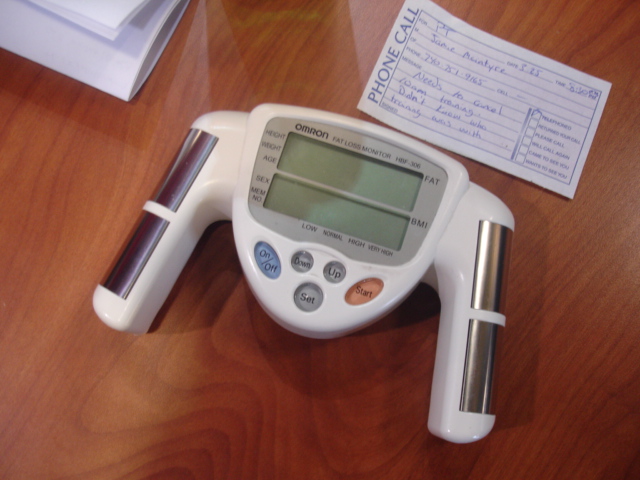

So whatever this customer I met in the supplement aisle received from his personal trainer could have easily crossed the boundaries. I didn't really look at the sheet of paper, but I'm guessing there were specific recommendations that were personalized for the customer, which is illegal in Ohio, unless his PT was also an RD. Read more about the difference between a nutritionist and a registered dietitian here. I also found a great blog post written by another dietitian, here.

QUESTION: Did you know that in some states (other than Ohio) anyone can call themselves a nutritionist, no matter what type of background/education they have? Do you think personal trainers should be able to give out personalized diets?


Saturday, August 6, 2011

This Week's Nutrition and Health News

Here are a few of my favorite nutrition and health articles from the week;


Lancet Paper Blasts Cochrane Salt Study

(Several weeks ago there was some research that surfaced about how reducing salt levels doesn't actually lower heart disease risk. Well, as it turns out, the results were false. Go figure.)

Source: iStockPhotos


Risk Factors For Heart Disease Increase By Fructose Consumption

(ALERT! AWFUL RESEARCH HERE!! They tested fructose, HFCS, and glucose. Umm, hello, why not sucrose?! We don't typically eat glucose, we eat it in combination with glucose in a 1:1 ratio as a disaccharide called sucrose, or table sugar. Anyone else with me on this one?! I do have to agree with one thing, however, and that is that the Dietary Guideline's upper limit for added sugar is too high.)


Really? The Claim: A Normal Heart Rate is 60 to 100 Beats Per Minute

(Don't believe everything you hear! You could be at risk for a stroke if your heart rate is actually greater than 80.)


Position of The American Dietetic Association; Nutrition Intervention in the Treatment of Eating Disorders


(While my own experience with anorexia proved that an RD can actually be harmful, not helpful, I think I just had a bad experience because I was not seeing a dietitian who was trained in the area of eating disorders. I think dietitians play an integral role in ED intervention, but they need to be trained in working with eating disorders and they need to be a part of a multidisciplinary team of experts.)

Source: iStockPhoto


TV Product Placements Are a Junk Food Ad Loophole!


(Food companies have pledged not to market unhealthy foods and beverages to children, but instead they are turning to product placements in TV shows. I mean, seriously?! I'd rather they go back to making the ads. I think product placements are more subliminal and effective. Ugh)


The Problem With Serving Sizes


(Sorry, I have to disagree with this article. I think that the fact that our nation is 66 percent overweight or obese just goes to show us that while we may typically eat more than the average serving size, we shouldn't! Why would we make the serving sizes larger just because most people eat more than a serving? That just sends a message that it's ok to eat six cookies instead of three. So dumb. What they really need to do is work on making serving sizes more understandable, "3 ounces"...umm, what does that mean?! We don't all own food scales.)


Enjoy your weekend everyone!! Starting tonight I'm on "stay-cation" for a whole week! :) Any fun plans for the evening??

Thursday, January 6, 2011

Can't Sleep? Melatonin May Be An Option

This week has been crazy, but so fun! I've been in Pittsburgh getting trained by the American Dietetic Association on how to teach kids about nutrition. I'm having a blast, but also can't wait to get home later this evening so I can unpack and get in my comfy clothes :)


I recently did some research on the supplement melatonin, because not only did I get a request for a post about it, but I have also had several people ask me about it at work. So what is melatonin? Melatonin is a neurohormone in the brain, which increases prior to bedtime. People typically take melatonin if they have trouble sleeping or staying asleep.


Overall, I think it's a great investment. I am always skeptical about sleep aids, but the research indicates this one might be worth the money. Research suggests that taking the quick-release melatonin 30-60 minutes before you go to bed will decrease the time it takes to fall asleep and also improve the quality and duration of sleep. Dosages typically range from .5-5mg.


Like all supplements, there is a potential for side effects and drug interactions. In fact, there is a long list of side-effects so I would highly suggest talking to your doctor before starting a melatonin regimen.


Source: iStock Photo


As always, make sure the supplement is high quality. I always look for USP certified products, which means they have been third party tested for quality. I would also suggest trying the melatonin supplement on a weekend first, when you don't have to work the next day. It may take some time to get used to your new sleep cycle (hopefully, a better sleep cycle!).


Even though melatonin seems to be safe, I would suggest asking yourself these questions first;


  • Are you sleeping in too late on the weekends? This could throw you off for the entire week and thus cause you to have problems falling asleep.
  • Are you consuming too much caffeine during the day? Clearly this could affect your sleep.
  • Are you consuming caffeine too late in the day (if I have coffee past 2pm I usually have trouble sleeping)?
  • Do you exercise later in the evening? This may give you too much energy before you go to bed.
  • Do you eat a lot late at night? Sugar or possibly even just too many calories later in the day can potentially keep you from getting a good night's sleep.

Question: What are your go-to methods for getting a good night sleep? Have you ever tried melatonin?

Tuesday, April 20, 2010

Refrigerator Food Safety. Is Your Fridge SAFE??

Today I'm going to start with a few things from yesterday's post:

1) I keep my bananas in the refrigerator because it slows down the ripening process. This has a lot to do with the humidity in your drawer. It should be set to low, because fruits ripen faster in areas of high humidity. Veggies are the opposite, as they will stay more crisp in areas of high humidity. BTW, it also helps to separate bananas! They will ripen slower if you separate them.

2) I keep my whole wheat flour in the refrigerator because, again, it will last longer in the fridge. Whole grains have the endosperm, germ, and the bran (refined grains don't contain bran and germ). The bran and germ contain oils that could possible go rancid. Your flour will last a long time outside the fridge, but it will last longer in the fridge!

3) I looked at the ingredients for the Silk Almond Milk and noticed the second ingredient is evaporated cane juice. What a BUMMER!! I will not be buying this anymore :(

How Safe is YOUR Refrigerator?!

My master's thesis focused on food safety, specifically which factors predict whether or not an RD will teach food safety (fresh vegetable food safety) to their clients and/or patients. You may find this strange, considering I have not once (that I can remember) written a post focusing on food safety. Having posted about the foods in my refrigerator yesterday, here are seven "Chilling Facts" about American's refrigerators, which were accumulated from research by Tennessee State University, Kansas State University, and RTI International.

Source: The ADATimes, a publication of The American Dietetic Association

1) Fewer than 50% of Americans know that their refrigerator should be below 40 degrees F. If it's higher than that your food is at risk of being contaminated by bacteria (and I'm not talking the good bacteria that you find in yogurt!).

2) A large majority of Americans have no idea what the current temperature of their refrigerator is. Do you have a thermometer in your refrigerator? I'll admit, I don't. I'm bad. However I do know that my refrigerator is cold enough because the food in the way back always freezes. I should still get one though. And it's not just important to get a thermometer, it's also important to check the thermometer! One of the areas I'm not sure about, despite my food freezing in the back, is the food on my door.....

3) Most refrigerators tested by researchers (76%) had an internal temperature that exceeded 40 degrees F. Ninety-one percent had door temperatures about 40 degrees F. Try not to keep foods like meat, poultry, fish, or dairy on the door. When you open the refrigerator those are the first to get warm. Same with your freezer.

4) More than half of Americans store their food in a way that makes cross-contamination an issue. According to the article and the research, it's likely that many people have spoiled food in their refrigerator right NOW! Remember, eggs can be stored up to four to five weeks beyond the carton's packing date. Leftovers should be discarded after four days. Also, don't place raw poultry or meat on the top shelf unless it is well packaged. To learn more, check out FoodSafety.gov.

5) Very few people (if at all) clean their refrigerators thoroughly. As part of my research at OSU I had to take a sponge and do swabs of people's refrigerators, under their drawers. You should have seen some of the crap I saw.....nauseating. Have you taken your drawer out lately?? A thorough cleaning includes emptying out the fridge, cleaning out the interior surfaces with a wet towel or disinfectant wipe, and taking out the bins/drawers to clean them, and clean the area underneath. I do this before I go to the grocery store, when my fridge is pretty empty. Be sure to DRY ALL SURFACES because a wet refrigerator means bacteria may thrive.

6) The produce bin is the area in the fridge that is most likely to harbor bacteria. The researchers didn't find just any bacteria either, they were pathogenic bacteria such as E. Coli and Salmonella! This doesn't surprise me after some of the stuff that I saw during my time swabbing people's refrigerators. Make sure you use your produce fairly quickly and don't allow it to spoil. If it does, clean the drawer with an antibacterial rag or spray.

7) A faulty door seal is a major problem! Check your door seal and see if there is resistance with a gentle tug. There should be some resistance. Also check for mold between the cracks (there shouldn't be mold). This is typically a problem in older refrigerators, but can be a problem even in new ones! If your door seal if faulty or the seal is losing it's grip, this could create condensation inside the fridge, causing mold and inconsistent temperatures.

Coming Up
My next post will include a new recipe and the low down on the common ingredient; soy protein isolate. Later in the week I will show you what's in our freezer and cabinets. Oh yeah, I'll also be posting about our big MOVE! BTW, does anyone have any good suggestions for a mattress? We're currently looking for a new one and we don't know where to begin.

Thanks for reading everyone. Have a great day!

Monday, February 8, 2010

Veggie Omelet and Nutrition Tidbit; Chia Seeds

Thanks for all of your fantastic comments about my issue with the "NOT SO HEALTHY" section in the grocery store. You all made such great points and some of you gave me a good laugh :) Ironically I found this article today online, which focused on the same exact issue!!

I've been on a role lately with my recipes for my 2010 cookbook. I'm now on to number 10. This means I'm right on target with my new year's resolution of two new recipes a week!

Quick, Healthy, and Cheap Recipe #10
Veggie Omelet

Ingredients
2 eggs
1/4 cup fat free milk
1/4 cup spinach
1 t oil (for the pan)
2 T plain Greek yogurt

1 T cheddar cheese
Dash of salt and pepper

Possible Modifications

  • Use egg beaters
  • Use any non starchy vegetable, in place of spinach
  • Use 1% milk, soy milk, rice milk or almond milk
  • Add any kind of cheese
  • Use light sour cream
  • Use butter to grease the pan, instead of oil
Directions

Crack the eggs into a small bowl. Add the milk, salt, and pepper. Use a whisk to beat the eggs and milk until blended. Add oil to skillet and turn on heat to low/medium.

Heat the skillet for about 30 seconds. Add the egg and milk mixture to the skillet and cook for 2-3 minutes, or until eggs are "set but still shiny". Add the spinach on top of the eggs in a single layer, then fold the omelet in half. Cook for another 30-60 seconds.


Take out of pan, place on plate, and add a dollop of Greek yogurt and the cheddar cheese.


Check out those layers of spinach! I served this on top of some quinoa.


Rate: 9.5 out of 10
I love eggs. Period. Nick doesn't like anything in his eggs, other than cheese and Red Hot, so he didn't try this amazing creation.

** I used Omega-3 enriched eggs for extra healthy fats!**

Nutrition Tidbit
Chia Seeds

What are they? Chia seeds come from the Salvia hispanica plant, which happens to be a member of the mint family.

Origin: It is believed that Chia seeds originated in Central America, where the seeds were a staple of the Aztec diet (I actually remember writing a report about the Aztecs when I was in 3rd grade! I don't remember Chia seeds though...haha).

How do you eat them?: You can eat them raw, or add them to a variety of dishes, such as breads, biscuits, other baked goods, oatmeal, oat bran, or smoothies!

Why have they become popular?: Chia seeds have recently gained attention from health enthusiasts due to their high amounts of omega-3 fatty acids (in the form of ALA, a precursor to the EPA and DHA found in fish oils). They also contain protein, fiber, minerals, and antioxidants.


Research: Studies have shown that including chia seeds as part of a healthy diet may help improve heart disease risk factors, such as lowering cholesterol, triglycerides, and blood pressure. However, there really aren't many high quality studies that have been done, and most studies have used either animals, or a very small number of participants.

Bottom Line: If you like chia seeds, fantastic! Enjoy them as a part of your healthy diet. Don't go out of your way to "try to like them" or to incorporate them into your diet as much as possible, as there are other foods with similar benefits, and which actually have reliable and valid research to back up their benefits.

Updates
  • Giveaway alert! If you want a chance to win a yogurt maker, baking pans, or a steamer, click the link here.


  • Don't forget my own "Random Giveaway", which ends on Friday. Check it out here.

Coming Up
Tomorrow I'll be sharing my new "must have foods". No, they will not all revolve around the FODMAPS diet, these will be foods that everyone can enjoy.

Thanks for reading, and have a great night/day!