
Me: "I'm sorry you are having trouble losing those last 10 pounds, let's take a look at what a typical day of eats might look like for you. Ok?"
Client: "Sure thing....I wake up, have some fruit, cereal and milk, go to work, have an apple for a snack, have lunch, typically a sandwich and fruit, have dinner, usually chicken or a lean protein and whole wheat pasta and a couple glasses of milk, and maybe some fruit for dinner".
Me: "Hmmmm, ok. I think we can work on a few things here...."
Client: "But I thought I was doing so well!"
Me: "You are, this sounds really great in many ways. First off, you're starting your day with breakfast, that's amazing. Second, you're eating lean proteins, getting some calcium and vitamin D, and lots of nutrients from your fruits. Heck, you're even eating whole grains. But.....you need to reduce your milk and fruit, and increase your vegetables, specifically your non-starchy vegetables"
Client: "Reduce my fruit and dairy?! I thought they were healthy!"
Me: Well, they are healthy, but so is extra virgin olive oil, and dark chocolate, but you surely shouldn't be eating a lot of those!
Client: "Well, that's different"
Me: "Is it?"
Me: Well, they are healthy, but so is extra virgin olive oil, and dark chocolate, but you surely shouldn't be eating a lot of those!
Client: "Well, that's different"
Me: "Is it?"
Ok, maybe those examples are slightly different, but they are examples I like to use because both EVOO and dark chocolate are loaded with great nutrients, but that doesn't mean more is always better. The same can be said about dairy products, fruit, and starchy vegetables.
Remember this (below)? It's called Choose My Plate and it's based on the 2010 Dietary Guidelines for Americans. You can go to the website and get your own personal recommendations as to how many servings (cups) of fruits, vegetables, and dairy you need in a day (all are sources of carbohydrate), as well as ounces of protein and grains (grains are also a source of carbohydrate). In my opinion the recommendations tend to be a little too high, especially for those trying to lose weight, but....either way it's a good starting point.

Are you ready for a little lesson on carbohydrates? Don't worry, I'll make it short and sweet.

 The cereal above has 24 total grams of carbohydrate, 2 grams of which is from indigestible dietary fiber, and 10 grams of which is from simple sugar (monosaccharides) and the other 12? They are from starches, which aren't listed on the label, but sometimes are listed as "Other Carbohydrates"
 Strange? You wouldn't think milk or plain yogurt would have any sugar, but lactose (a type of simple sugar) is found in all dairy products. As you can see sugar makes up 90% of the carbohydrates in this yogurt. Remember, sure is a carbohydrate. In my opinion, there should be an alternative sub-category called "Added Sugar". Would you know that the plain yogurt above has zero added sugar? I know that because there isn't any sugar listed on the ingredient label. All of the sugar in this product must be from lactose, a naturally occurring sugar.
Remember this (below)? It's called Choose My Plate and it's based on the 2010 Dietary Guidelines for Americans. You can go to the website and get your own personal recommendations as to how many servings (cups) of fruits, vegetables, and dairy you need in a day (all are sources of carbohydrate), as well as ounces of protein and grains (grains are also a source of carbohydrate). In my opinion the recommendations tend to be a little too high, especially for those trying to lose weight, but....either way it's a good starting point.

Are you ready for a little lesson on carbohydrates? Don't worry, I'll make it short and sweet.

Carbohydrates (Carbon, Hydrogen, and Oxygen bound together) come in two (well...three) forms:
- Simple: mono- or disaccharides (glucose, fructose, galactose, maltose, sucrose, and lactose); these are mainly found in dairy, fruits, and non-starchy vegetables like broccoli and carrots.
- Complex polysaccharides (starches such as legumes, corn, potatoes, bread, and cereals)
- Fiber: On food labels, fiber is considered a carbohydrate. This is because fiber is a type of polysaccharide, which plays a structural role in plants. Humans cannot digest fiber.
When you look at a food label, this is what you see:
 The cereal above has 24 total grams of carbohydrate, 2 grams of which is from indigestible dietary fiber, and 10 grams of which is from simple sugar (monosaccharides) and the other 12? They are from starches, which aren't listed on the label, but sometimes are listed as "Other Carbohydrates"
When you look at a label for milk or plain yogurt, you may see this:
 Strange? You wouldn't think milk or plain yogurt would have any sugar, but lactose (a type of simple sugar) is found in all dairy products. As you can see sugar makes up 90% of the carbohydrates in this yogurt. Remember, sure is a carbohydrate. In my opinion, there should be an alternative sub-category called "Added Sugar". Would you know that the plain yogurt above has zero added sugar? I know that because there isn't any sugar listed on the ingredient label. All of the sugar in this product must be from lactose, a naturally occurring sugar.
Ok, so how many grams of total carbohydrates should you eat in a day (including your simple sugars and starches, and even fiber)? Most people need anywhere from 45% to 60% of their calories to be from carbohydrates. Here are some examples of the math;
240 grams carbs/day, on a 1600 calorie diet, is 60%
200 grams of carbs/day, on a 1600 diet, is 50%
300 grams of carbs/day, on a 2000 calorie diet, is 60%
250 grams of carbs/day, on a 2000 calorie diet, is 50%
1 cup of most dairy products = ~15 grams of carbohydrates, or more (usually more, because most people eat yogurts with added sugar, or they add their own in the form of honey!)
1 small piece fruit = 15-20 grams of carbohydrate, or more, because many people get their fruit in the form of juice, which can have much more than 15-20 grams of carbohydrate in a cup. The same goes with dried fruit, which can have tons of added sugars, in addition to the naturally occurring sugars found in fruit.
200 grams of carbs/day, on a 1600 diet, is 50%
300 grams of carbs/day, on a 2000 calorie diet, is 60%
250 grams of carbs/day, on a 2000 calorie diet, is 50%
When I counsel people on weight loss and/or management, I typically recommend sticking to a 50% carbohydrate diet (or sometimes even 45%). This really depends on their activity level. When I work with athletes the recommendation usually goes up.
Here are some things to keep in mind;
1 cup of most dairy products = ~15 grams of carbohydrates, or more (usually more, because most people eat yogurts with added sugar, or they add their own in the form of honey!)
 |
| Source: iStock Photo |
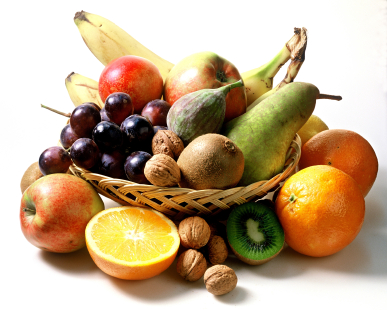
1 small piece fruit = 15-20 grams of carbohydrate, or more, because many people get their fruit in the form of juice, which can have much more than 15-20 grams of carbohydrate in a cup. The same goes with dried fruit, which can have tons of added sugars, in addition to the naturally occurring sugars found in fruit.
 |
| Source: iStock Photo |
So, let's say you eat 3 cups of fruit and 3 cups of dairy a day, that could easily add up to 90-120 grams just from your healthy dairy and fruit. Oh, but let's not forget the grains, the starchy vegetables, and extra sugars found in desserts, snack bars, instant oatmeals, etc, which you will surely be eating as well! Do you see how easily you could go over the above recommendations for total carbohydrates?! So, what's wrong with too many carbohydrates? To put it in simple terms, the more carbohydrates we eat, the more insulin we produce, and the more hungry we get (especially if we eat them without fiber, fat, or protein). Carbohydrates are a quick source of energy that don't take much work to digest and use by our bodies. We need carbohydrates, yes, but we don't need the amount we are consuming here in America.
 |
| This Banana Split Oatmeal breakfast looks healthy, and let's be honest, it is! But the original recipe called for double the fruit, which would have made this way too carbohydrate-rich, in my opinion. Fruit is good for us, but that' doesn't mean more is always better, especially in one sitting. And the same goes with "natural" honey or agave. |
Here are a couple things to read, if you aren't convinced.
- My blog post from last year about my encounter with a women who was following Weight Watchers' new points system, and eating way too many fruits (which are considered "Free").
- Is sugar really that bad for you? This is a great article from CNN.com. They talk about how we can definitely consume too much sugar, and how it's not good for us, whether or not it's from agave, honey, sugar in the raw, or whatever. They briefly discuss how sugar from fruits, starchy vegetables and dairy shouldn't be avoided, but I would add that they do need to be limited.
- ***** Science Daily posted this great article about how yes, you CAN eat too many fruits and vegetables (specifically the starchy ones) and how if you want to overeat anything, overeat those non-starchy veggies (spinach, kale, carrots, cucumber, celery, etc.) because they have much less carbohydrates and are mainly water and fiber.
Natural or not, all sugars are treated the same in our body. Carbohydrates/sugars are best when found in whole fruits and vegetables, whole grains, and dairy products, but not because those carbohydrates/sugars are better for us, but because they are found in healthier foods! In other words, the sugar found in fruit is no better for you than the sugar found in cake, but the fruit is a better choice because those sugars are coming with antioxidants, fiber, vitamins, and minerals!
 |
| My opinion? Put the tomatoes, cauliflower, carrots, and peppers from this photo in place of the breads and pastas. |
Bottom Line: You can eat too much dairy, fruits, and starchy vegebales. Yes, they are healthy, but you need to limit your intake. Period. They still come with calories, and they still come with carbohydrates (and thus, sugars). Want to go wild? Go overboard on non-starchy vegetables.
 |
| My brother Joe, about 3 years ago, learning at a young age that non-starchy veggies are so yummy. |
QUESTION: What kind of questions do you have for me? Any? Comments, concerns? Let me know in the comment section!
Thanks for reading!
The Candid Rd
NOTE: I love comments! But, be sure to come back to read any replies to questions or comments, as they do not go directly to your e-mail.
)


